How to Replace a Broken Pipe Under Your Sink
2026-2-28
How to Replace a Broken Pipe Under Your Sink
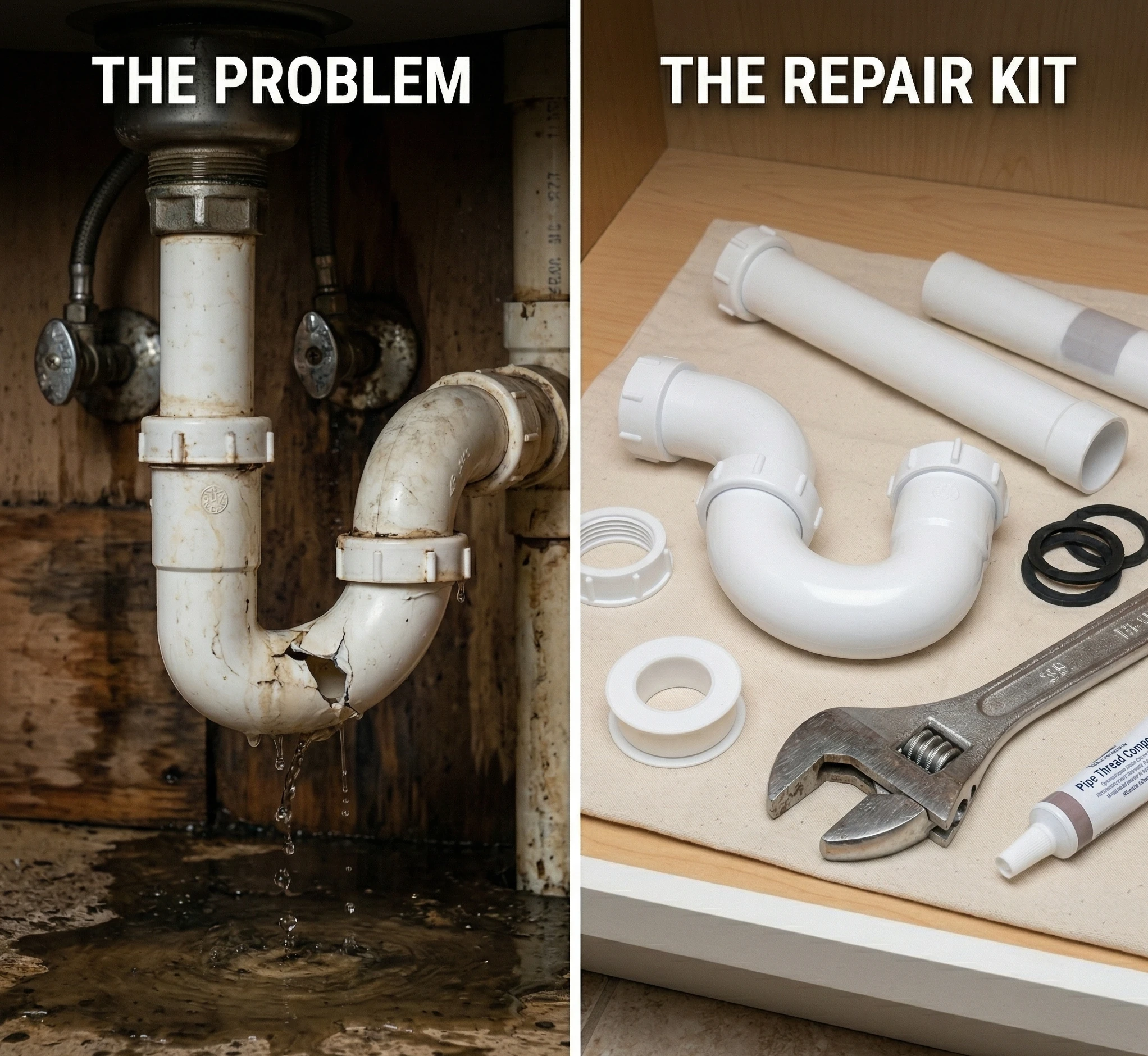
Few plumbing problems cause as much immediate panic as water gushing from a broken pipe under your sink. Whether it's a cracked P-trap, a leaking supply line, or a corroded drain pipe, a failure under your sink threatens your cabinets, flooring, and the structural integrity of your home. At Judd's Plumbing, we've helped countless homeowners navigate these repairs—and we're here to guide you through both the DIY approach and when to call in the professionals.
Assessing the Problem: What's Actually Broken?
Before you start any repair, you need to identify exactly what's leaking.
Common Under-Sink Pipe Failures:
P-Trap (Drain Pipe): The curved pipe that holds water to block sewer gases. These often crack or loosen at connections.
Water Supply Lines: Flexible braided or plastic tubes that connect shut-off valves to faucets. These burst, crack, or leak at connections.
Shut-Off Valves: The small valves where supply lines connect to wall pipes. These can fail internally or at the packing nut.
Faucet Connections: Points where supply lines attach to the faucet itself.
Trap Arm: The straight pipe extending from the P-trap into the wall.
Gathering Your Tools and Materials
Tools You'll Need:
- Adjustable wrenches (two for loosening stubborn connections)
- Slip-joint pliers
- Bucket or large bowl (for catching water)
- Towels and rags
- Pipe cutter (for cutting new pipe sections)
- Plumber's tape (Teflon tape)
- Pipe wrench (for stubborn connections)
- Flashlight (for seeing in tight spaces)
Materials (Based on Your Pipe Type):
For PVC/Plastic Pipes:
- New P-trap kit (includes trap, trap arm, washers, nuts)
- PVC primer and cement (for permanent connections)
- Replacement washers
For Metal Pipes:
- Replacement trap assembly (chrome or brass)
- Replacement washers and nuts
- Plumber's putty
For Supply Lines:
- New flexible supply lines (measure length needed)
- Replacement shut-off valve (if needed)
- Plumber's tape
Step-by-Step P-Trap Replacement
Step 1: Prepare the Work Area
- Clear everything from under the sink
- Place a bucket directly under the trap
- Lay down towels to protect cabinet floor
- Have good lighting available
Step 2: Shut Off Water and Remove Standing Water
- Turn off both hot and cold water supply valves
- Open faucet to relieve pressure and drain remaining water
- Place bucket beneath trap
- Loosen slip nuts with wrench or pliers
- Allow water to drain into bucket
- Remove trap completely
Step 3: Inspect and Clean Connections
- Check trap arm (pipe going into wall) for damage
- Clean all threads and surfaces
- Remove old washers and nuts
- Inspect wall connection for corrosion or damage
Step 4: Assemble the New Trap
- Dry-fit all pieces to ensure proper alignment
- Apply plumber's tape to threads (for metal connections)
- For PVC, test fit before applying cement
- Start with trap arm into wall connection
- Attach the J-bend (curved section)
- Connect the sink tailpiece (pipe from sink strainer)
- Tighten all slip nuts hand-tight, then 1/4 turn with wrench
Step 5: Test for Leaks
- Place bucket under connections
- Slowly turn water supply back on
- Run water and watch for drips
- Tighten connections slightly if needed (don't overtighten)
Replacing Water Supply Lines
Step 1: Shut Off and Drain
- Turn off angle stop valves (hot and cold)
- Open faucet to release pressure
- Place towels beneath connections
Step 2: Remove Old Supply Lines
- Use wrench to loosen nut at shut-off valve
- Use second wrench to loosen nut at faucet
- Remove old line completely
Step 3: Install New Supply Lines
- Check that new line is correct length (not stretched tight or excessively coiled)
- Apply plumber's tape to valve threads if needed
- Hand-tighten connections, then 1/4 turn with wrench
- Ensure lines are not kinked or twisted
Step 4: Test
- Slowly open shut-off valves
- Check for leaks at both connection points
- Run faucet to test flow
Replacing a Shut-Off Valve
This repair requires more skill and carries higher risk. Call Judd's Plumbing if you're unsure about any step.
If You Proceed:
- Shut off main water supply to the house
- Open faucets to drain remaining water
- Use two wrenches (one to hold pipe, one to remove valve)
- Clean pipe threads thoroughly
- Apply plumber's tape (3-4 wraps clockwise)
- Install new valve hand-tight, then snug with wrench
- Turn main water back on slowly and check for leaks
PVC vs. Metal Pipes: What You Need to Know
PVC/Plastic Pipes
Advantages:
- Easier to cut and assemble
- Resistant to corrosion
- Less expensive
Installation Notes:
- Use PVC primer before cement for proper bond
- Cement sets quickly—have all pieces positioned before applying
- Allow proper curing time before testing
Metal Pipes (Chrome, Brass)
Advantages:
- Traditional appearance
- Durable when properly maintained
Installation Notes:
- Use two wrenches to prevent twisting
- Plumber's tape essential for threaded connections
- Avoid overtightening (can crack fittings)
When to Call Judd's Plumbing
While many under-sink pipe repairs are DIY-friendly, certain situations demand professional expertise:
1. You Can't Access the Problem
If the leak is behind walls, inside cabinets with no clearance, or requires removing cabinets or countertops, call a professional.
2. Pipes Are Corroded or Stuck
If connections won't budge with reasonable force, forcing them can cause pipe failure behind walls.
3. The Wall Connection Is Damaged
If the pipe coming from the wall is corroded, broken, or the connection is failing, this requires wall opening and professional repair.
4. You've Attempted Repair and Still Leaks
Sometimes what seems like a simple P-trap leak is actually a failing pipe behind the wall. A professional can properly diagnose.
5. Multiple Leaks or System-Wide Issues
If you're experiencing multiple pipe failures, this may indicate systemic problems (corrosion, pressure issues, aging pipes) requiring comprehensive assessment.
6. You're Uncomfortable with Any Step
Never proceed with a repair if you're uncertain. A small mistake can cause extensive water damage.
Preventing Future Under-Sink Pipe Failures
Regular Inspections
- Check under sinks monthly for drips or moisture
- Feel around connections for wetness
- Look for early signs of corrosion or discoloration
Proper Usage
- Avoid storing heavy items that could bump pipes
- Don't hang items from pipes
- Avoid pouring harsh chemicals down drains
Maintenance
- Tighten loose connections promptly
- Replace old supply lines every 5-10 years
- Consider upgrading aging shut-off valves
Temperature Protection
- Keep cabinet doors open during extreme cold (even in Arizona)
- Insulate pipes in exterior walls
Protect Your Home with Proper Repairs
A broken pipe under your sink is more than an inconvenience—it's a threat to your home's structure and your peace of mind. Whether you tackle it yourself or call for professional help, addressing the problem quickly and correctly prevents costly water damage.
Need Professional Help with Under-Sink Plumbing?
Call Judd's Plumbing at 623-304-5833
Visit: juddsplumbingaz.com
Your home deserves the right approach to every repair. Whether you're tackling it yourself or calling for backup, Judd's Plumbing provides the expertise and support you need.