How to Shut Off Your Water Supply in an Emergency
2026-2-28
How to Shut Off Your Water Supply in an Emergency
A burst pipe, a sudden leak, an overflowing appliance—in a plumbing emergency, every second counts. The single most important action you can take to protect your home from catastrophic water damage is knowing how to shut off your water supply immediately. Yet many homeowners have never located their shut-off valves, let alone practiced using them. At Judd's Plumbing, we believe every homeowner should master this simple but crucial skill. Here's your complete guide to emergency water shut-off.
Why Knowing Your Shut-Off Valve Matters
The Numbers Speak for Themselves:
- A 1/8-inch crack in a pipe can release over 250 gallons of water per day
- 5 minutes of flooding from a burst pipe can cause $5,000-$10,000 in damage
- 1 inch of water throughout a 2,000-square-foot home weighs over 12,000 pounds and causes extensive structural damage
Knowing where your shut-off valve is and how to operate it can mean the difference between a minor cleanup and a catastrophic flood.
The Two Types of Shut-Off Valves
1. Individual Fixture Shut-Off Valves
These small valves control water to specific fixtures and should be your first response for localized problems.
Where to Find Them:
- Toilets: Small valve on the wall or floor behind the toilet
- Sinks: Two valves (hot and cold) under the sink
- Washing Machines: Two valves (hot and cold) on the wall behind the machine
- Water Heater: Cold water inlet valve on top of the tank
- Dishwasher: Under sink, often connected to sink supply line
When to Use:
- Overflowing toilet
- Leaking sink faucet
- Washing machine hose burst
- Dishwasher leak
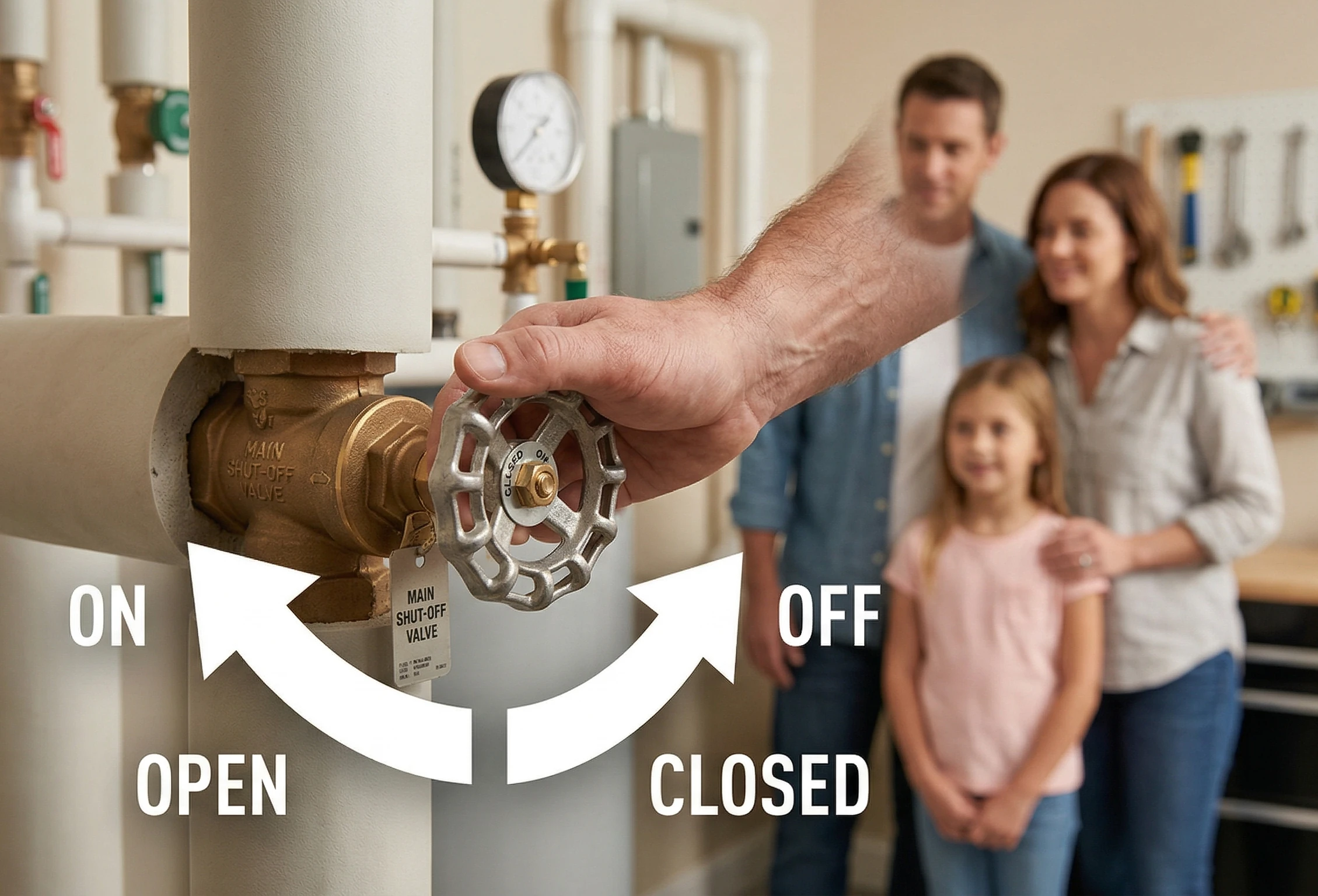
2. Main Water Shut-Off Valve
This valve controls water to your entire home. Shutting this off should be your first response for any whole-house emergency.
When to Use:
- Burst pipe anywhere in the home
- Major leak you can't immediately locate
- Water heater failure
- Any plumbing emergency when you can't stop water at the fixture
- Leaving home for extended periods (as a precaution)
Locating Your Main Water Shut-Off Valve
Common Locations:
- Garage: Front wall closest to the street, near the water heater
- Basement or Crawlspace: Where the water line enters the home
- Utility Room: Near the water heater or furnace
- Exterior Wall: In warmer climates, sometimes on an outside wall
- Water Meter Box: Near the street, under a metal or concrete lid (requires special tool in some areas)
What to Look For:
- Gate Valve: Round, wheel-shaped handle that turns clockwise to close (common in older homes)
- Ball Valve: Straight lever handle that turns 90 degrees—perpendicular to pipe means closed, parallel means open (common in newer homes)
- Water Meter: Sometimes serves as shut-off point, often requires a special key
Today's Assignment:
- Walk through your home and locate your main shut-off valve
- Place a bright tag on it so you can find it quickly in an emergency
- Test it by turning it off and on (if it's old and hasn't been moved in years, be gentle or call us to inspect first)
- Teach every adult and teenager in your household its location and operation
Step-by-Step Emergency Water Shut-Off
For a Specific Fixture:
- Locate the fixture's shut-off valve (toilet, under sink, etc.)
- Turn the valve clockwise (right) until it stops
- Confirm water has stopped by operating the fixture
- Contain any remaining water with towels or buckets
For the Whole House:
- Stay calm and move quickly to your main shut-off valve
- Turn the valve clockwise (right) completely:
- For gate valves (wheel handle): Keep turning until tight—don't force
- For ball valves (lever handle): Rotate lever so it's perpendicular (crosswise) to the pipe
- Open a faucet on the lowest level of your home to drain remaining water from pipes
- Turn off your water heater if the leak is near it to prevent tank damage
- Call Judd's Plumbing at 623-304-5833 for emergency repairs
Common Shut-Off Valve Problems and Solutions
The Valve Won't Turn
Causes: Corrosion, mineral buildup, hasn't been operated in years
What to Do:
- Apply penetrating oil (like WD-40) and wait 10-15 minutes
- Use a wrench carefully for additional leverage
- If still stuck, call Judd's Plumbing—forcing can break the valve
The Valve Turns But Doesn't Stop Water
Causes: Failed internal components, worn gate
What to Do:
- This indicates the valve needs replacement
- You may need to use the water meter shut-off (at street) for emergency shut-off
- Call Judd's Plumbing for valve replacement
You Can't Find Your Main Valve
What to Do:
- Look near your water heater
- Check the garage where the main water line enters
- Examine exterior walls near the front of your home
- If you have a water meter box, the shut-off may be inside
- Call Judd's Plumbing—we can locate it for you and label it
Water Meter Shut-Off: The Final Option
If your main shut-off valve fails or you can't find it, your water meter box provides an alternative shut-off point.
Locating Your Water Meter Box:
- Usually near the street or sidewalk
- Concrete or plastic lid marked "Water" or with utility company logo
- May be buried under grass or landscaping
How to Shut Off at the Meter:
- Remove lid carefully (watch for insects or debris)
- Locate the customer shut-off valve (often a ball valve or small gate valve)
- Use a meter key or adjustable wrench to turn valve clockwise
- Some meters require a specialized tool—call us if you need assistance
Important: Some municipalities require permits or have restrictions on meter box operation. Check local regulations.
Special Considerations
Homes with Fire Sprinkler Systems
If your home has a fire sprinkler system connected to your main water line, shutting off water affects fire protection. Know if your system is separate or tied to household plumbing.
Condos and Apartments
If you live in a multi-unit building, your individual unit shut-off may be located:
- Behind an access panel in your unit
- In a utility closet
- In a common area (you may need building management assistance)
Vacation and Seasonal Homes
If you leave your home for extended periods:
- Consider shutting off your main water supply as a precaution
- Drain pipes after shutting off to prevent freezing or undetected leaks
- Have a neighbor check periodically if possible
Emergency Preparedness: Create Your Plan Today
- Locate and label all shut-off valves in your home
- Take photos and store them on your phone for quick reference
- Practice the process with all family members
- Keep tools handy near shut-off valves (wrench, meter key)
- Save Judd's Plumbing number in your phone: 623-304-5833
After You Shut Off the Water
Once you've successfully stopped the water:
- Open a faucet on the lowest level to drain remaining water from pipes
- Turn off your water heater (if not already done) to prevent overheating or damage
- Contain and clean up standing water to prevent mold and damage
- Call Judd's Plumbing immediately for professional repair
Be Prepared Before the Emergency
You never know when a plumbing emergency will strike, but you can be ready when it does. Taking 15 minutes today to locate and test your shut-off valves could save you thousands of dollars in water damage tomorrow.
Need Help Finding or Replacing Your Shut-Off Valves?
Call Judd's Plumbing at 623-304-5833
Visit: juddsplumbingaz.com
Your home's safety starts with knowing how to stop the water. Trust Judd's Plumbing to help you prepare for emergencies and respond when they happen.